No. 20 | Whiteley
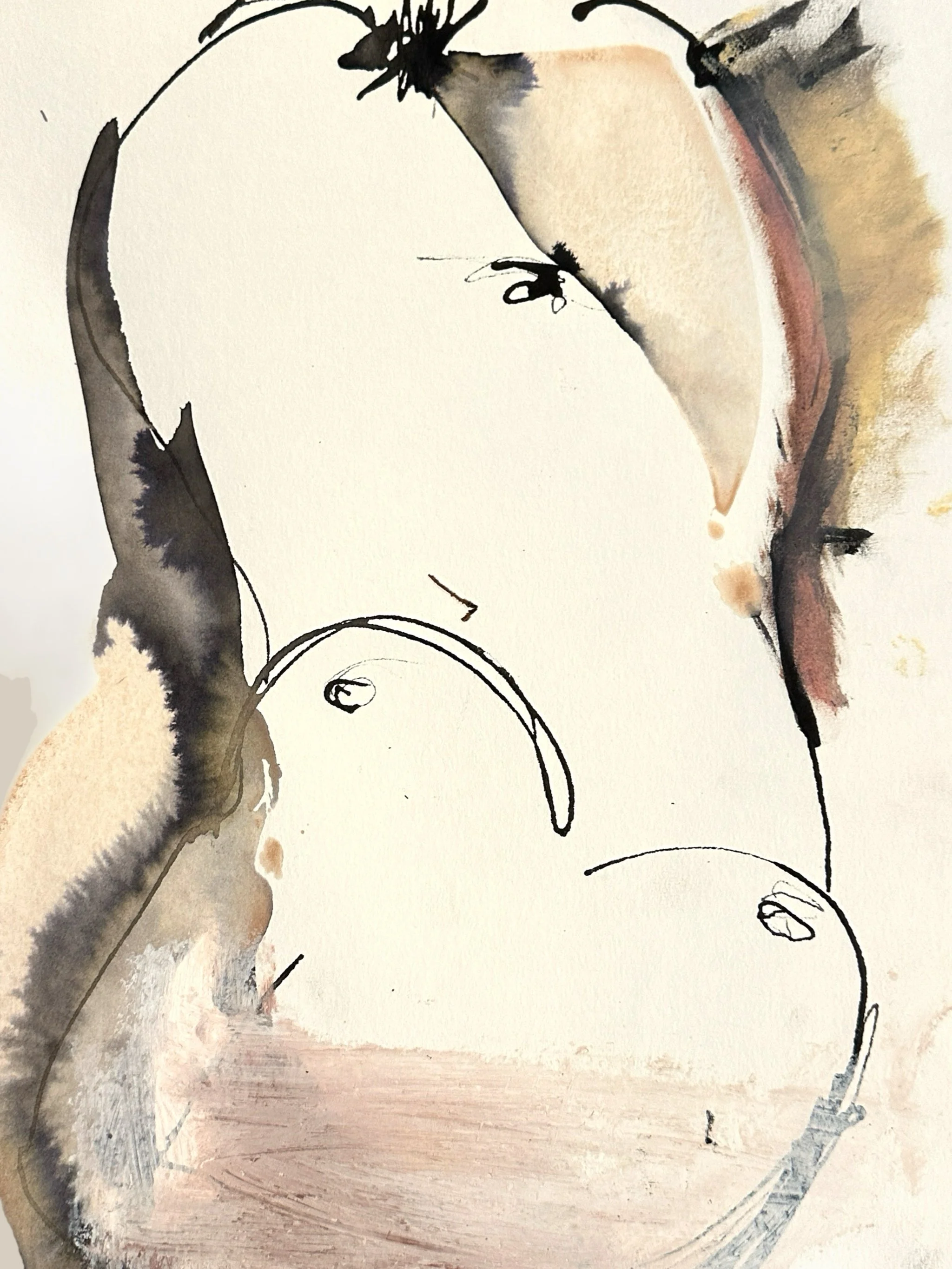
I remember my first life drawing class. I was 21 and it was the Toronto School of Art. A fat, wrinkly, old grey-haired woman walked in and stripped naked. In my naive youth, I had a rush of embarrassment for her. The hair on her head was grey as a ghost, and so too matched the hair down below. I couldn’t believe she had the courage to strip in front of us. I was so judgemental back then. Superior, as if age would never one day touch me.
In retrospect, my judgement of women was probably the result of too much porn (it was everywhere in my youth thanks to the internet) and too little engagement with the real women in my life (my grandmother died when I was 7, and my mother left when I was 8). I was left to be raised by a fun-loving chauvinist whose opinion on women was regular dinnertime discourse. I didn’t know better.
But that life drawing class would change the way I see us, and it is something I’ve never forgotten.
When we started drawing, I was in my judgemental mind. “Why couldn’t they bring in a real model.” I was hoping to draw something pretty, like a Kate Moss or a Claudia Schiffer. I’m a 90’s girl after all, and smooth young bodies were thrown in my face all throughout childhood. But something happened when I laid down the first line. Her wrinkled body began to tell stories. Her curves became more than just rolls of fat. My judgement softened and I realised that the body I was staring at was a lived experience. I was immediately humbled. Her curves softened me. Her grey hairs charmed me. I felt love for the woman in front of me. How could I have judged her so harshly?
Removing the 90’s lens of the patriarchy and ‘woman-as-sex-symbol’ has been a life-long mission, one I battle to this day, except this time the target is my 42 year old self.
This is one of the reasons why I love to draw women. I find us fascinating. Carriers of society’s projections and misplaced emotions. Each curve telling its own story. Each wrinkle an expression of a life lived in sorrow or joy (most likely both). And anatomy that starts war.
Drawing women without their heads is to objectify them, and is a big no in art class. And yet isn’t that how we have been seen for so long? Our parts. Our service to mankind. How often have the people within female bodies been overlooked, dissected and segmented. Favoured for what we provide, rather than appreciated in our wholeness?
Whiteley is a 30×42 cm expressionist drawing inspired by the works of Australian artist Brett Whiteley, who also drew women, mostly with their heads on. In my rendition of his work, I used ink, charcoal tambi paint and oil sticks on watercolour paper. Unlike Whiteley however, I failed to represent her head. Partly because I am in defiance that I should have to include it when society runs amuck disregarding within us, and partly because my composition is notoriously such that I am always running out of space.